
By: I Komang Agus Widiantara
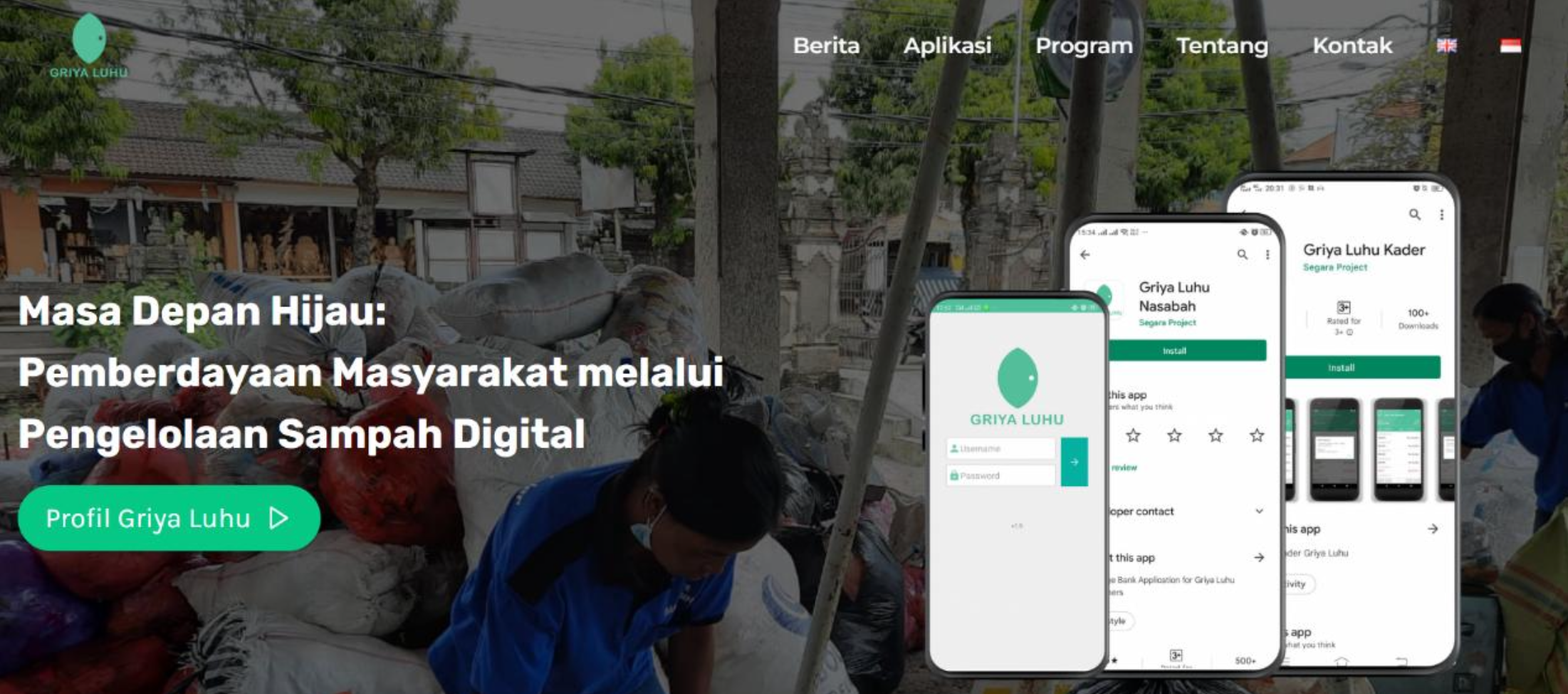
The Griya Luhu app, which residents can use to manage waste in Gianyar, Bali.
Imagine Bali’s legendary beaches — white sands, blue waves, and the tropical sun that draws millions of tourists every year. But behind those beautiful postcards lies a dark reality: trash!
As a world-class destination, Bali’s waste pile is growing rapidly. According to the National Waste Management Information System (SIPSN, 2024), Bali produces around 1.2 million tons of waste per year, or 3,600 tons per day. By 2025, that figure has exceeded 4,200 tons per day, or about 1.5 million tons annually. The surge is driven by uncontrolled mass tourism, rapid urbanization, and imported waste that worsens the island’s fragile ecology.
This waste crisis in Bali reflects a systemic failure in environmental management. Although the Bali Regional Government has responded with various regulations, such as Source-Based Waste Management (PSBS) and clean tourism campaigns, these efforts often get trapped in slow-moving bureaucracy.
Take for example the TPA Suwung landfill in Denpasar, which has long been overloaded and even caught fire for more than 30 consecutive days in 2023. The fire released toxic fumes that endangered residents and tourists alike. Conflicts with local communities also emerged, as waste from luxury hotels was often “imported” irresponsibly. If not resolved, projections suggest Bali’s daily waste volume will continue to rise uncontrollably in the coming decade.
The waste problem pushed Griya Luhu, a community founded in 2017 in Desa Beng, Gianyar, to take action. The founder, Ida Bagus Mandhara Brasika, was troubled by the unending waste issue in his surroundings. His concern led Griya Luhu not only to educate residents but also to take a more significant role—transforming into a waste bank, and eventually into a digital waste management startup.
Griya Luhu stands on a simple thesis: effective waste management isn’t about “picking up faster,” but about “reducing and sorting earlier.” And that requires social architecture, not just more garbage trucks. Now, the results are impressive.
After four years of operation, by 2021 they managed 74 units in 14 villages, diverting 10–13 tons of waste per month from landfills. Today, they oversee about 100 units, serve 12,000 customers, and handle 100 tons of waste annually. While these numbers haven’t solved Bali’s massive waste problem, the impact is real and tangible.
So, how does Griya Luhu operate and manage to play such a strategic role in Gianyar’s waste management?
As an ecopreneur-based startup, Griya Luhu has positioned itself as both a community unit and a business that empowers people to care for the environment through waste banking.
Waste banks are particularly effective in rural areas because local residents are accustomed to communal living. With a digital touch, Griya Luhu gathers data and understands local waste habits. It can monitor and track waste volumes, material types, and even identify the most efficient collection routes in nearby areas. Griya Luhu also functions as a circular economy platform, encouraging people to sort waste, reduce landfill contributions, and even earn money in the process.
Before the Griya Luhu waste bank app was launched, waste deposit records were done manually. Now, every member must register before becoming a customer. This ensures that app users are genuinely interested in participating in waste banking. Once registered, members can start depositing their waste, which Griya Luhu then manages.
Griya Luhu also offers several creative and unique waste management programs, including:
- JAGOAN (Jasa Pengelolaan Sampah Kawasan – Waste Area Management Service)
- JAWARA (Jasa Angkut Sampah Warga – Household Waste Collection Service)
- KIRIM SAJA (Kirim Sampah Jaga Alam – Send Waste, Save Nature)
- BELI SAJA (Beli Sampah Jaga Alam – Buy Waste, Save Nature)
With these initiatives, the number of waste bank customers continues to grow.
From Griya Luhu, we learn that strong awareness, when combined with digital technology, can build sustainable resilience. We also learn how citizens’ collective efforts can drive digital innovation—without bureaucratic obstacles. The collective care and coordination shown by the community in addressing waste is a grassroots response to climate issues often only discussed at elite levels.
In the hands of creative innovators, waste is not merely a disaster—it’s an opportunity to design rational socio-economic incentives that ensure environmental sustainability amid climate crisis and global pollution. Waste is not just a problem; it is a symbol of civilization, reflecting how humanity chooses to respond and find solutions.
Ultimately, the way we design our environment, build data, and nurture habits will determine the sustainability of our waste-filled world. This also opens the door to a rational circular economy for the future. If one small community in Gianyar can do it—why not all of Bali, or even Indonesia? It’s time to wake up, before waste buries us!